
RCA MA FASHION
UNIFORMITY / COMMUNITY
“ PART II: CLOTH ”
Osnaburg Cotton, Linen, Wool, Buckskin - all materials used to clothe the enslaved in the 18th and 19th century. Although described as low grade
and poor quality, the osnaburg cotton has a beautiful texture and feel to it - softer than a calico with more stretch. Muslin takes the place of
lightweight linens mentioned in the source material, and can be used to make undergarments, shifts and shirts.
Buckskin was also used to make mens breeches, especially for those who engaged in more taxing physical labour but were favoured by their
masters. As Buckskin is not readily available in the UK, I will be using various nubuck leathers.
These choices in material often reflected an enslaved persons social standing station.
This portion of the project is about uniformity and community. Wearing the same ‘mass’ produced, low quality clothing creates a
sense of community as it’s sets the owned from the owner.
The aim here is not to reproduce historical dress, the aim is to create a ‘uniform’ of pieces, in a cloth that holds meaning, but also to acknowledge
the resourceful and prideful spirit of the enslaved; and allow for small individual customisations such colour, pocket placement, sleeve length etc.
The less than perfect fit described in the research can be subverted, used as a way to show off other adornments
of the body. There could be so many variations; sleeves too short, ankle too short, mixed proportions, but maybe the body fits beautifully
- all displaying the pride and pleasure in dressing.
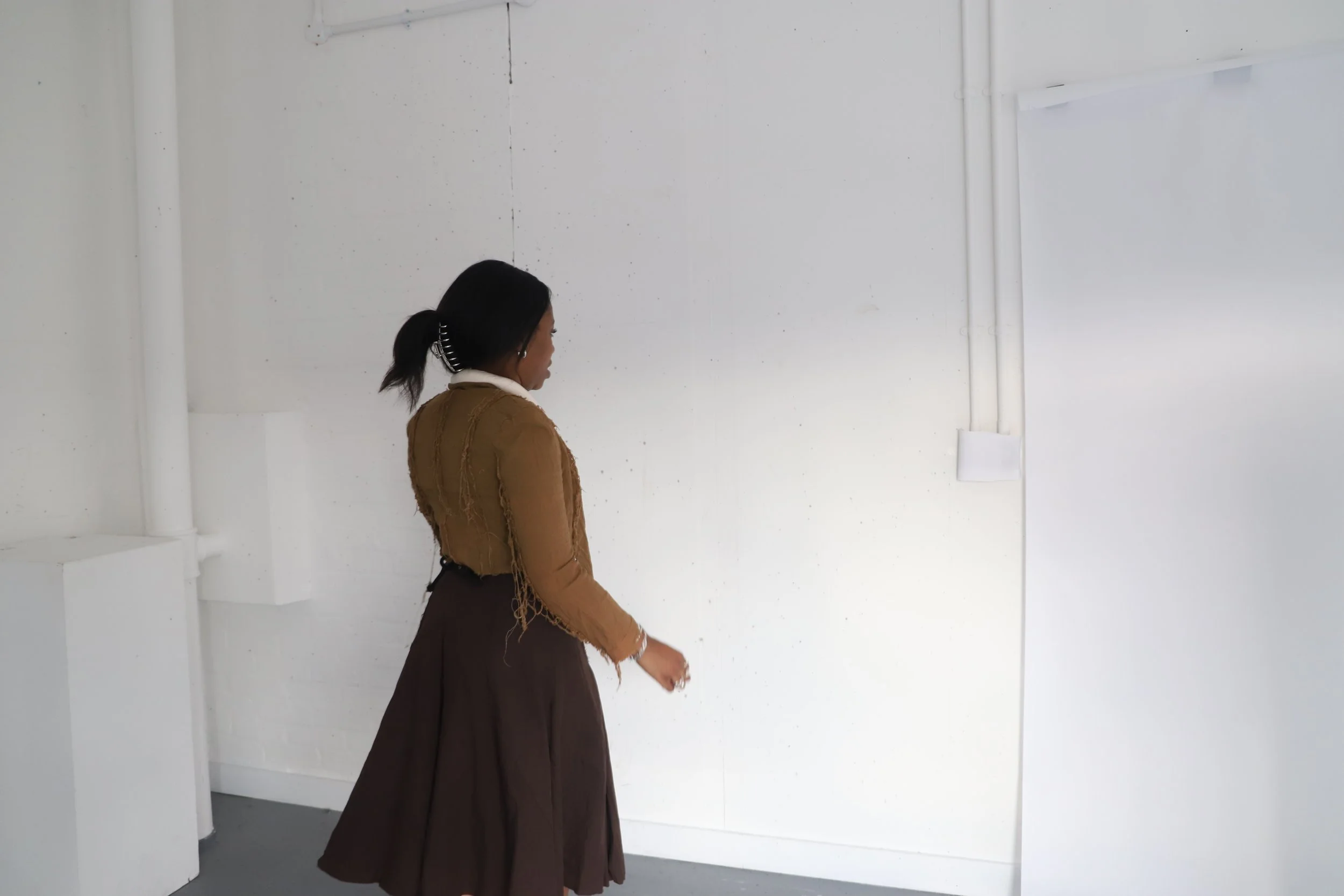
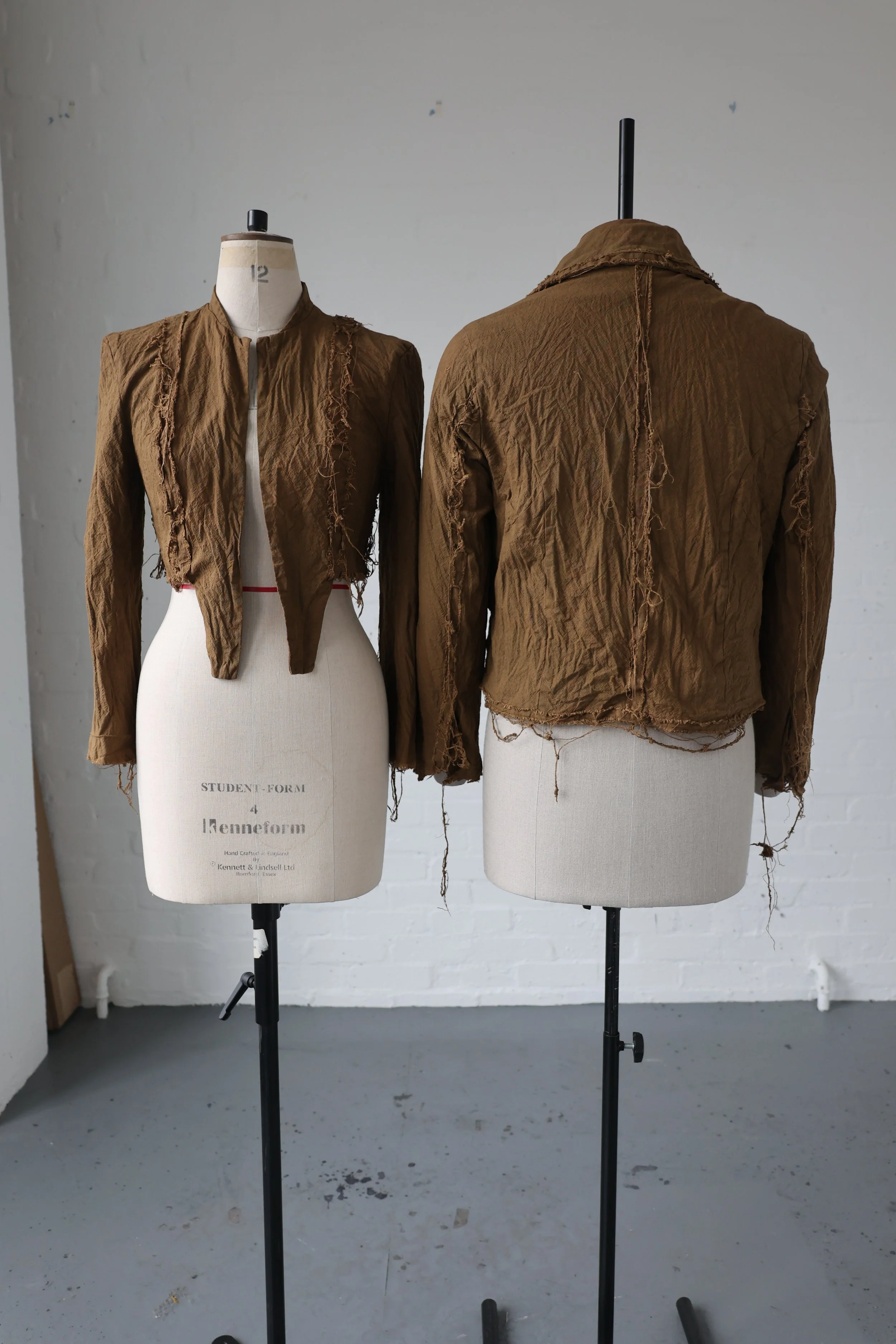
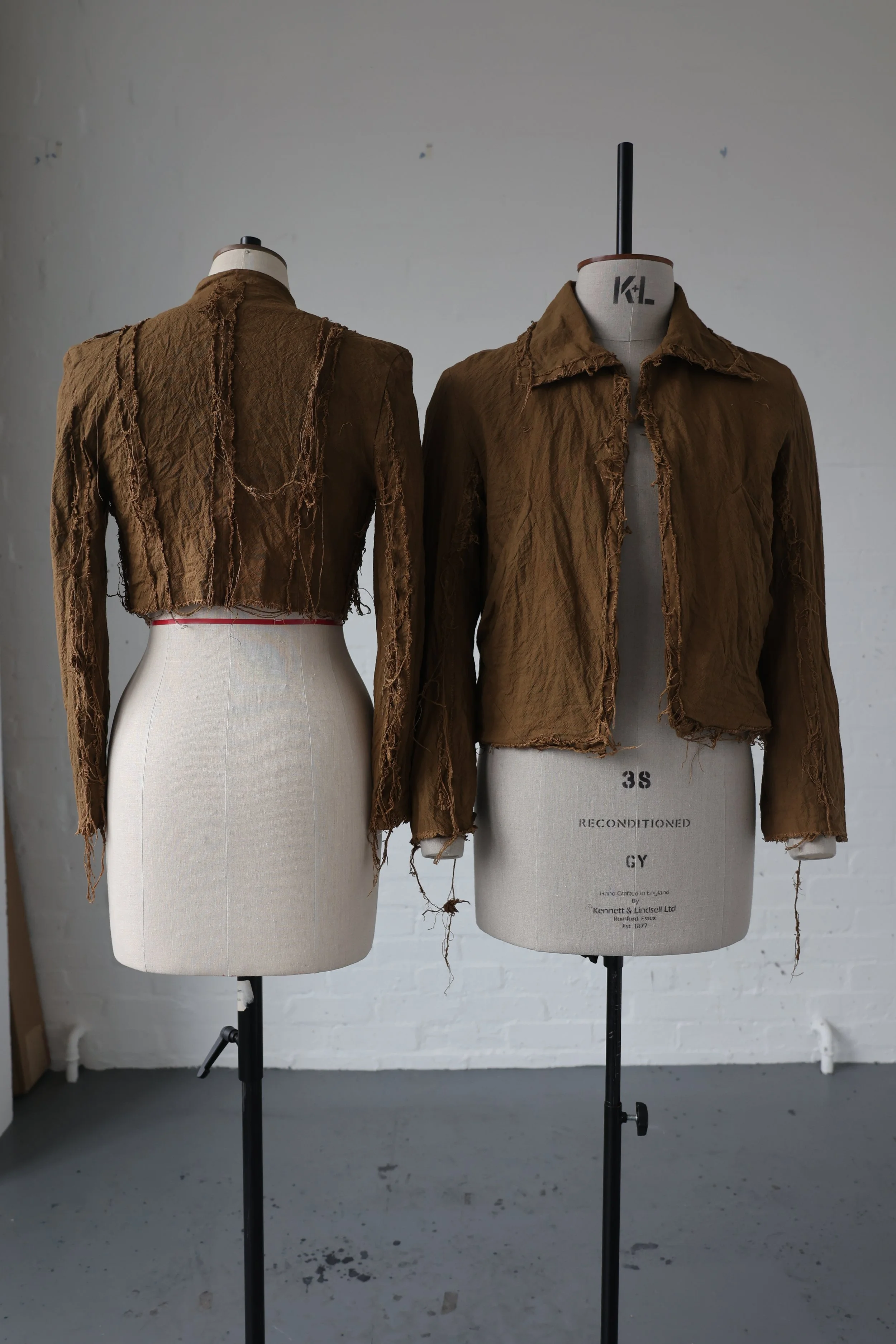
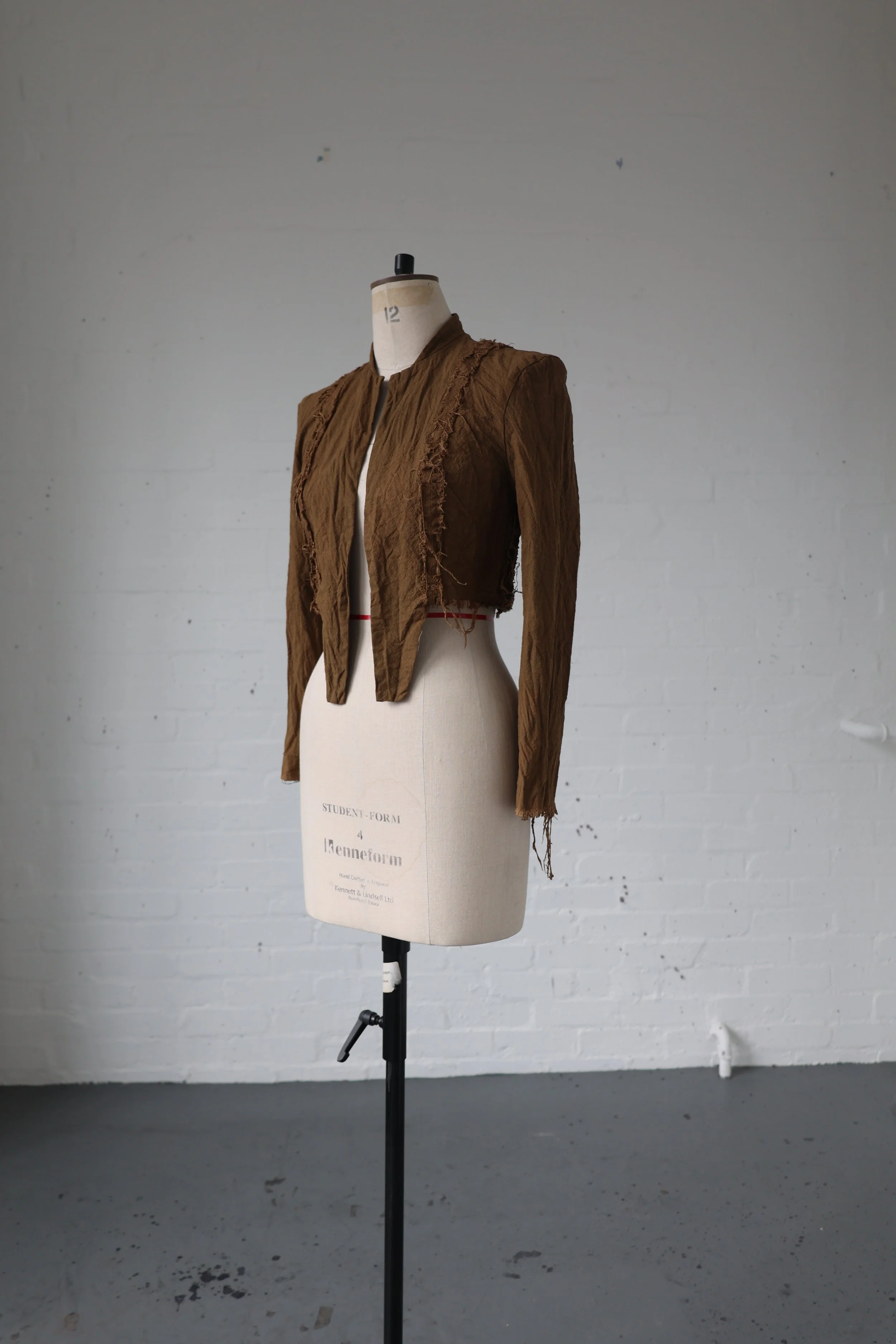
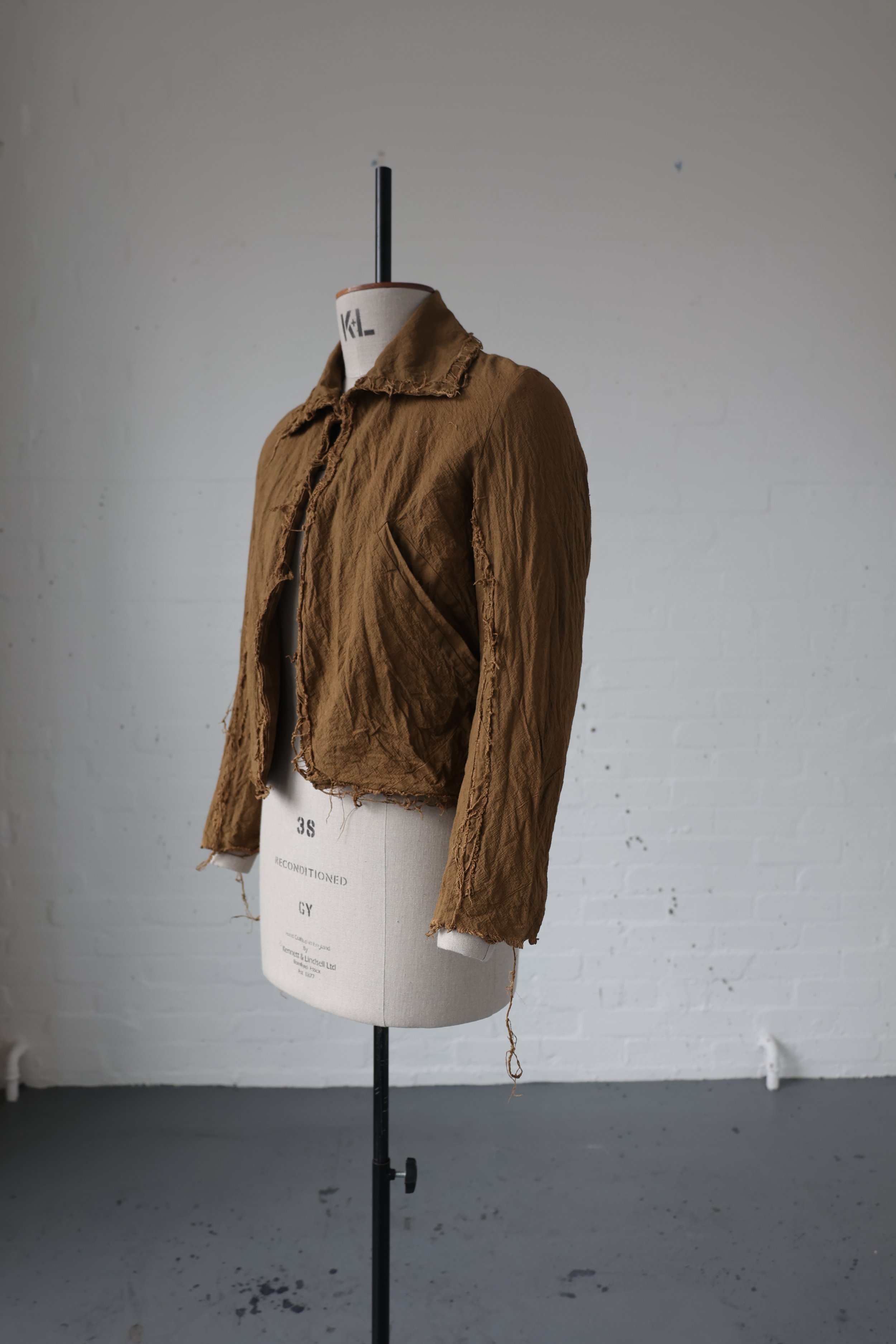
first iterations
Osnaburg Cotton Jackets with raw edge details, garment dyed.